2025.10.24 ICAST Drone Team Led by Assoc. Prof. Suzuki Wins at the World Robot Summit
The ICAST drone team achieved an outstanding victory at the World Robot Summit’s Harsh Environment Drone Challenge.
In October 2025, at the international robot competition “World Robot Summit (WRS),” the ICAST team at Chiba University—led by Associate Professor Suzuki—claimed victory in the drone category.
The WRS aims to advance robotics technologies across diverse fields such as industry, disaster response, and services. This time, ICAST competed in the Harsh Environment Drone Challenge (HEDC), organized by the Fukushima Institute for Research and Education (F‑REI), which assumes disaster-response missions in dangerous environments.
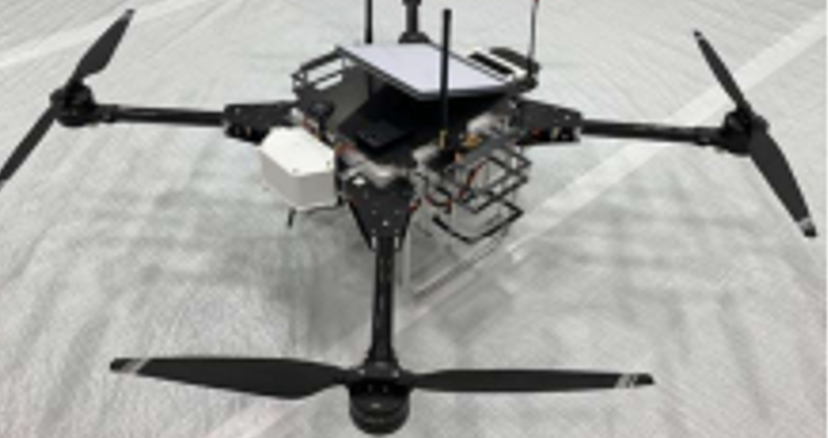
Overview image of the ICAST drone system used at WRS.
LTE‑Unavailable Disaster Environment
In the competition environment, LTE networks were considered unavailable due to base‑station damage and power outages, requiring fully autonomous mission execution. Associate Professor Suzuki commented, “These achievements will significantly contribute to safer and more efficient information gathering in real disaster sites. Going forward, we will further strengthen collaboration with industry to accelerate social implementation.”
Mission Overview
Mission 1: Emergency Vehicle Route Planning Survey overall disaster conditions and search for routes for emergency vehicles through interrupted road networks.
Mission 2: Character Recognition & Material Transport Read characters written on the ground from the air and deliver materials to specified locations via a delivery drone.
Mission 3: Survivor Detection in Collapsed Structures Enter damaged buildings to assess the status of immobile victims.
Technical Specifications
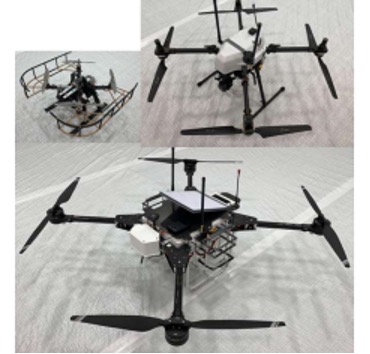
Drone Models: AC0404‑X, AQC‑01N, ACSLAB UAV
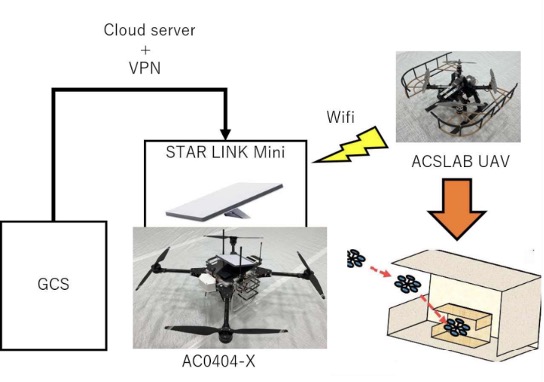
Communication System: Multi‑band wireless relay combining 2.4 GHz, 5.7 GHz, and 220 MHz; Wi‑Fi + VPN + Starlink relay
Network Equipment: Starlink Mini
Key Features: Multi‑UAV cooperative operation, real‑time route optimization, redundancy ensured by industrial wireless plus satellite communication
Photos
Drone exterior: two types (with protective guards / without guards)
Communication architecture: cloud server, VPN, GCS, Starlink Mini, and multiple UAVs